
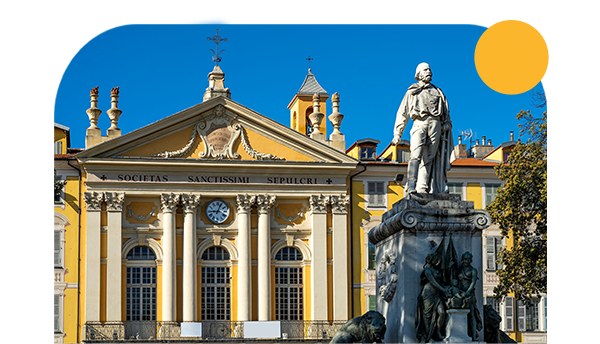
The French Riviera has a unique identity, shaped at the crossroads of French and Italian cultures.
Long before it became fully associated with the image of the French Riviera, part of this territory belonged to the Italian world.
Even today, architecture, gastronomy, traditions and even the local atmosphere reflect this Mediterranean heritage.
Table of Contents
• A shared history between Nice and Italy
• Italian-inspired architecture and urban planning
• Gastronomy with Ligurian roots
• A shared Mediterranean art of living
• Iconic Italian figures of the Riviera
Shared History: Nice and the Kingdom of Piedmont-Sardinia
Nice only became French in 1860, following the signing of the Treaty of Turin between Napoleon III and the Kingdom of Piedmont-Sardinia.
Before that date, Nice had been part of the States of Savoy for several centuries. This period deeply influenced the city’s urban structure, culture and language.
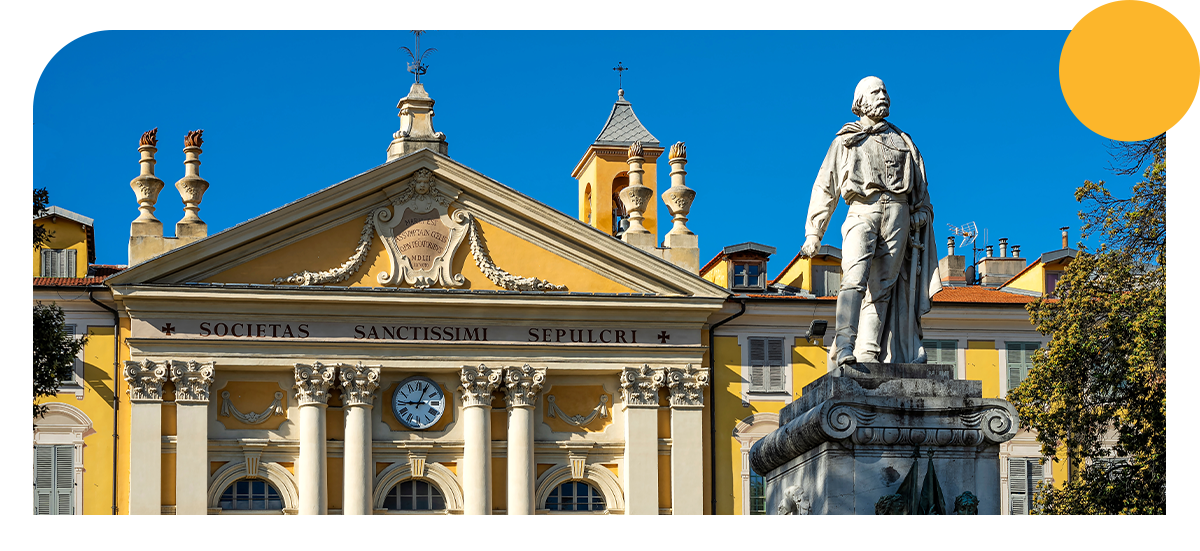
The Niçois dialect, for example, is closely related to Ligurian, spoken in northern Italy. Many local surnames and street names still reflect this history, including Rossi, Bianchi or Raimondi, as well as emblematic places such as Place Garibaldi and Palais Lascaris.
Niçois identity cannot therefore be understood solely through a French lens; it is the result of a cross-border heritage.
Architecture and Urban Planning: A Mediterranean Aesthetic Rooted in Italy
Italian influence is especially visible in Nice’s urban landscape.
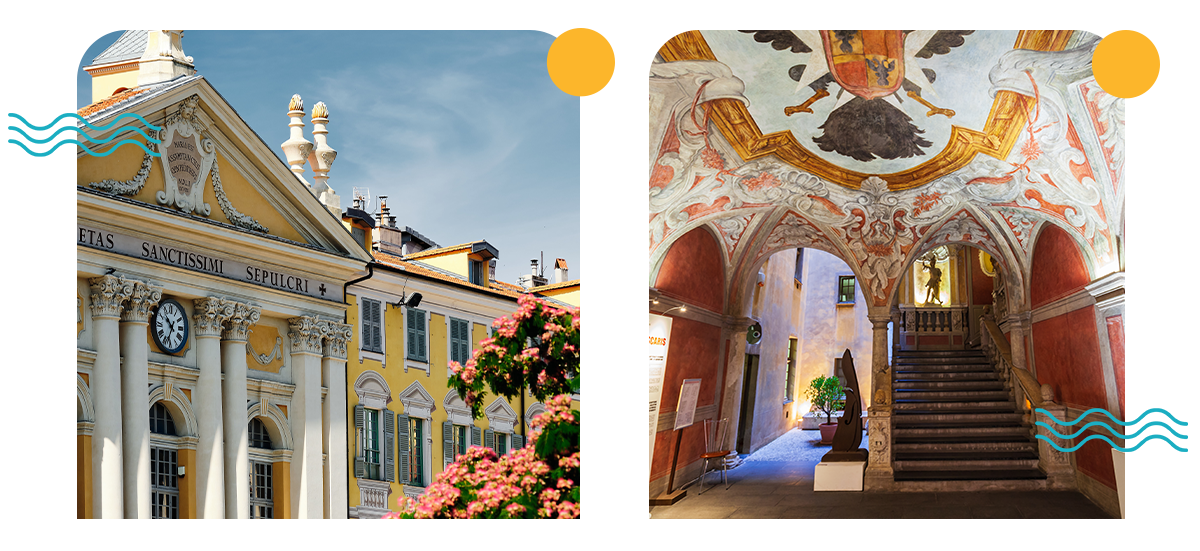
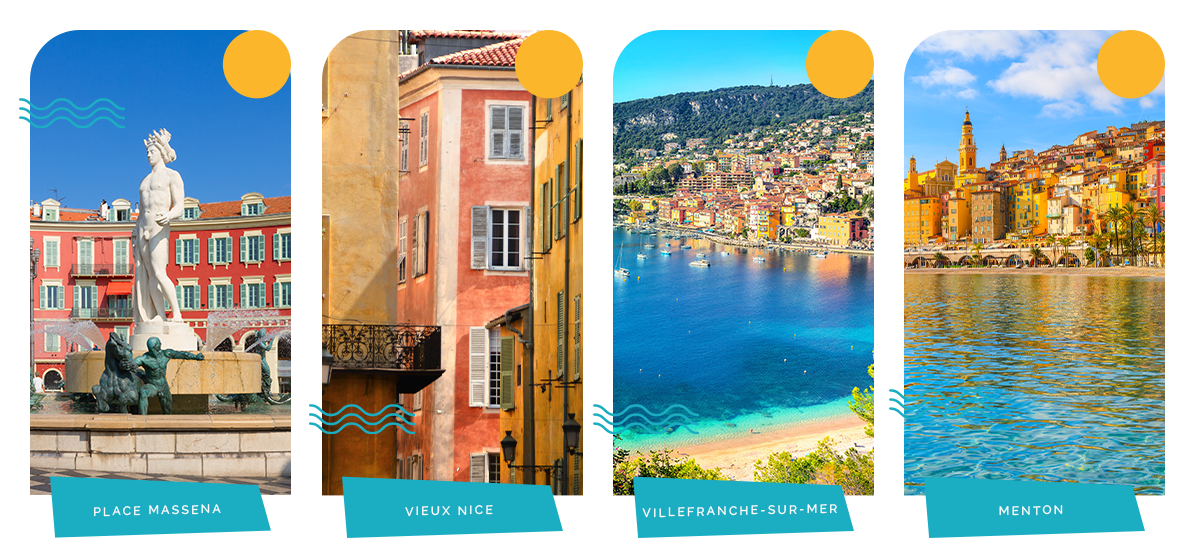
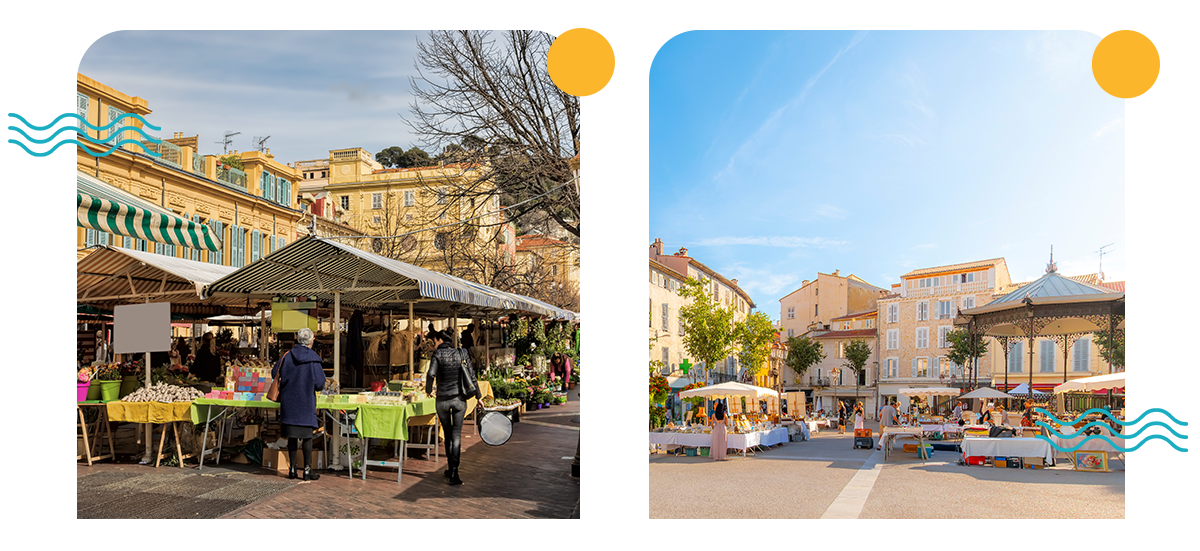
In Old Nice, façades in ochre and pastel tones, narrow streets and colorful shutters immediately recall the villages of the Ligurian coast. The atmosphere often feels closer to a small Italian town than to a traditional French city center.
Baroque churches and aristocratic palaces reinforce this impression. Palais Lascaris, once home to a noble family from Ventimiglia, is a striking example. The same family also owned a residence in Turin, illustrating the close ties between Nice and Piedmont in the 19th century.
Place Masséna also reflects this heritage. Designed by architect Joseph Vernier during the period of the Kingdom of Piedmont-Sardinia, it followed architectural guidelines established by the “Conseil d’Ornato,” a royal commission responsible for shaping and harmonizing the city’s urban aesthetics.
In Menton and Villefranche-sur-Mer, this visual continuity extends through ports, arcades and colorful façades.
The French Riviera thus preserves an architectural signature deeply marked by its Italian legacy.
Gastronomy: Flavors with Ligurian Origins
Niçois cuisine is one of the most tangible expressions of Italian influence on the French Riviera. It developed over centuries of constant exchanges with neighboring Liguria.
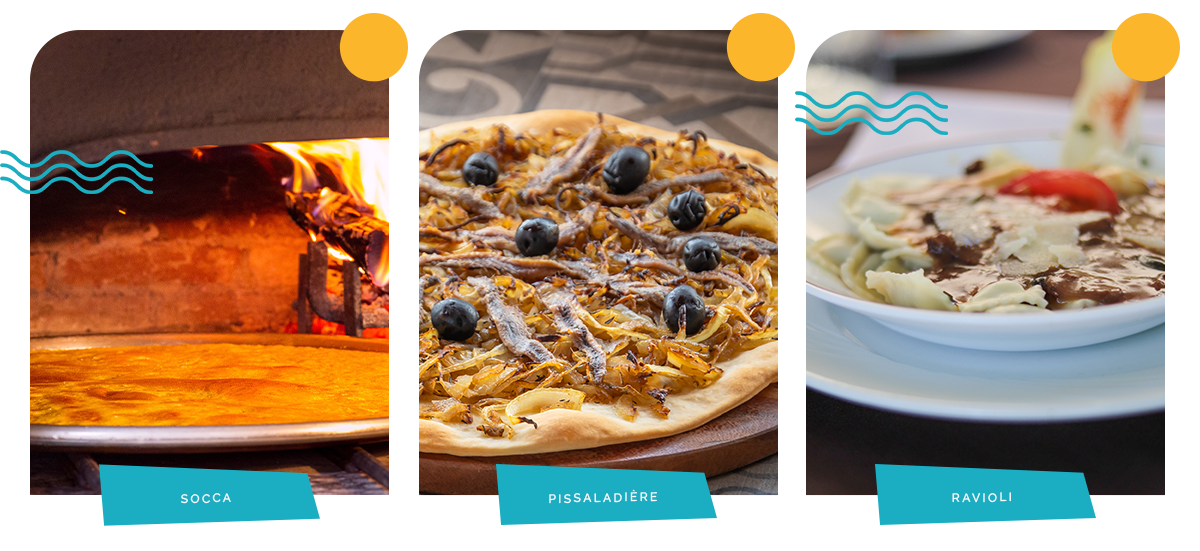
Socca, a thin chickpea flour flatbread baked in a wood-fired oven, closely resembles farinata, found in Genoa and throughout the Ligurian coast. It shares the same origins, simple ingredients and traditional cooking method.
Niçois ravioli, often filled with Swiss chard or slow-cooked beef, also echo Italian homemade pasta traditions. The culinary connection between Nice and Piedmont is particularly evident in these recipes passed down through generations.
Pissaladière, made with caramelized onions, anchovies and olives, highlights the shared Mediterranean pantry of both regions. Olive oil, aromatic herbs, seasonal vegetables, tomatoes and zucchini form the foundation of a cuisine shaped by climate and terroir.
More broadly, Riviera gastronomy follows a philosophy shared with Italy: local ingredients, minimal transformation and an emphasis on freshness and simplicity. This Mediterranean culinary identity transcends borders and contributes significantly to the authenticity of the Riviera.
Shared Mediterranean Art of Living
Beyond history and architecture, Italian influence can also be felt in the atmosphere.
Open-air markets, lively squares, sun-filled terraces and the importance placed on meals all recall the culture of the Italian piazza.
In Antibes as in Nice, life revolves around the outdoors, sunshine and the sea.
This cultural proximity helps explain why the French Riviera possesses such a distinctive art of living — both elegant and spontaneous.
Iconic Italian Figures of the Riviera
Italian influence is also embodied by historical personalities.
Giuseppe Garibaldi, a central figure in Italian unification, was born in Nice in 1807, when the city still belonged to the Kingdom of Sardinia. When Nice was annexed to France in 1860 following the Treaty of Turin, Garibaldi publicly opposed the decision. He believed that Nice naturally belonged to the Italian world, by history, culture and language.
This stance deeply shaped local memory. In Nice, Garibaldi became a symbol of the city’s historic ties with Italy. He represents the Savoyard period during which Nice was part of the Kingdom of Piedmont-Sardinia, as well as a distinct Niçois identity built at the crossroads of French and Italian cultures.
His legacy embodies this enduring connection between Nice and Italy.
Over the centuries, Italian artists, merchants and architects also contributed to the cultural and economic development of the region.
The Riviera is therefore not merely a border territory; it is a space of continuous exchange.
The French Riviera is more than a French postcard image.
It is the result of a long-standing dialogue between two Mediterranean cultures.
Architecture, gastronomy, language and art of living still bear the imprint of this Italian influence today, giving the Riviera its distinctive and refined identity.