
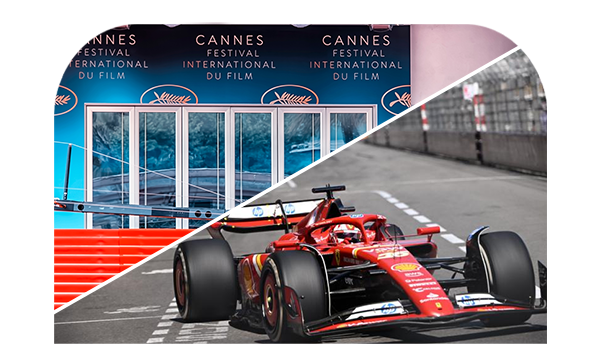
Before the spotlights shine on the Croisette and engines roar through the streets of Monaco, the French Riviera enters a phase of quiet yet spectacular transformation.
May doesn’t begin with glamour or speed. It starts with meticulous preparation. In Cannes as in Monaco, everything is set up behind the scenes, in silence.
Contents
- Cannes before the Festival: the machinery of cinema in motion
- Monaco before the Grand Prix: a city reconfigures itself
- Before the glamour, an immense invisible logistical effort
- Did you know?
Cannes before the Festival: the machinery of cinema in motion
The Cannes Film Festival doesn’t appear overnight. Long before the official opening, the Palais des Festivals comes alive.
Temporary structures take shape, press areas are set up, and teams test technical installations. A significant part of the infrastructure visible during the Festival is actually temporary and removable: platforms, media spaces, reception areas. The city transforms its layout in just a few weeks.
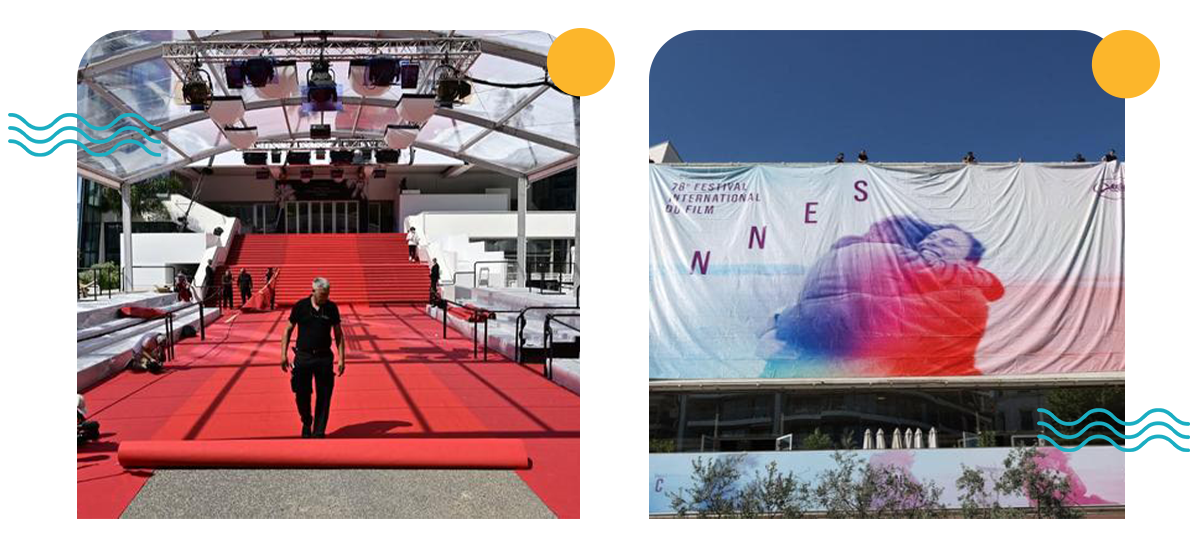
The building itself was designed for spectacle. Inaugurated in 1982, it was conceived with a strategic opening toward the Mediterranean. The steps, terrace, and outdoor spaces allow images broadcast worldwide to consistently include the sea as a backdrop. The Riviera thus becomes an integral part of the staging.
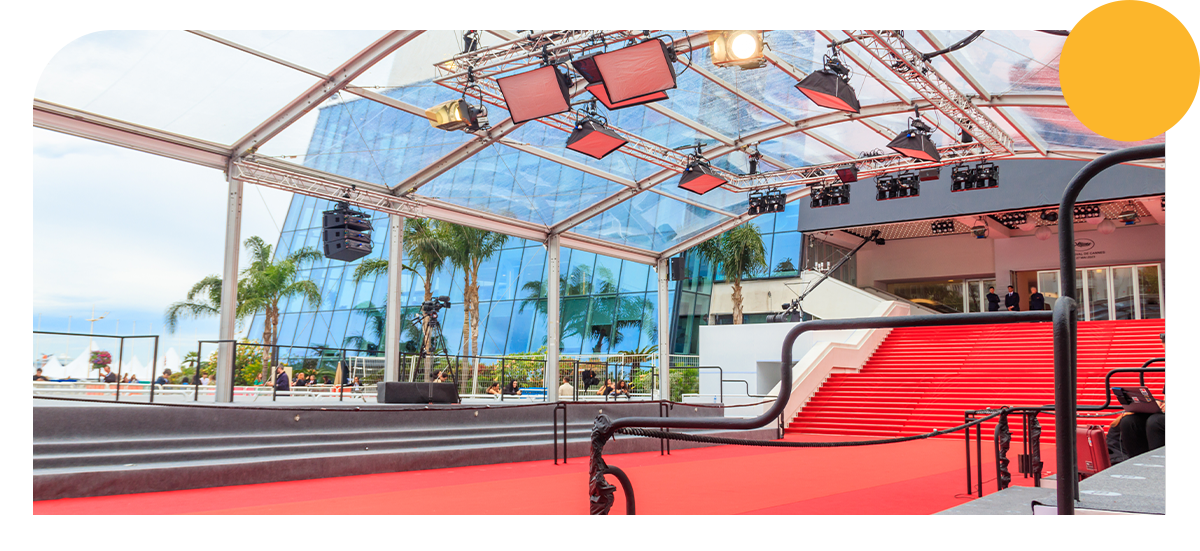
This international dimension is not new. The Festival, imagined in 1939 to rival the Venice Film Festival, only truly began in 1946 after World War II. Originally, screenings took place at the municipal casino. The event we know today was built gradually, becoming a global symbol.
👉 The Cannes Film Festival will take place from May 12 to May 23.
Monaco before the Grand Prix: a city reconfigures itself
In Monaco, the transformation is even more visible.
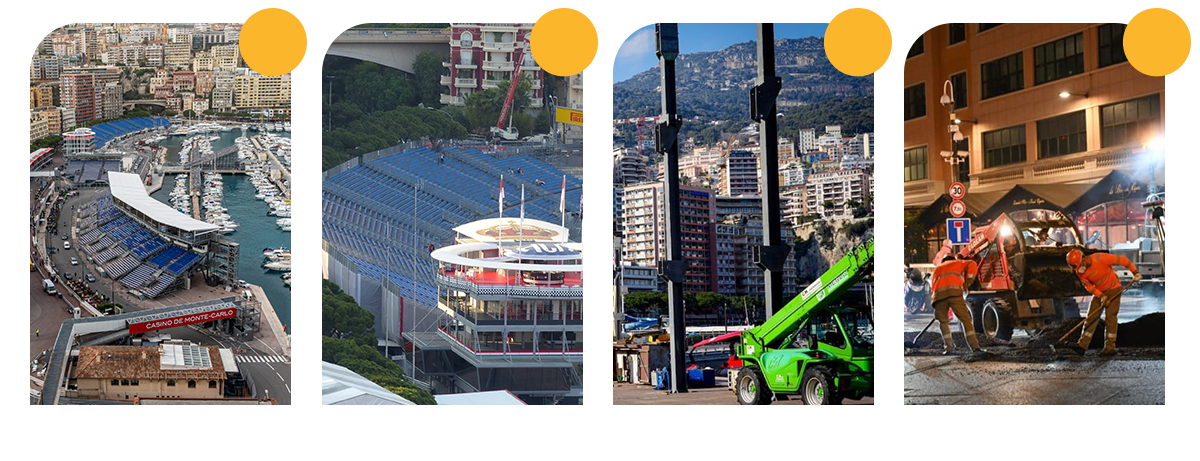
The Monaco Grand Prix, created in 1929, is one of the few historic circuits still on the Formula 1 calendar. Its uniqueness lies in the fact that it is a fully temporary street circuit, assembled and dismantled every year.
Safety barriers are installed several weeks in advance. Grandstands gradually appear along the track. Pit areas are built. It takes around six weeks to set up all the infrastructure, and several more weeks to remove it afterward.
The streets usually used by residents become technical racing segments. Locals adapt to this temporary transformation.
The Monaco circuit also imposes unique constraints on drivers. Corners are tight, barriers extremely close to the track, and run-off areas almost nonexistent. Teams adjust their cars specifically for this race: higher aerodynamic downforce, adapted suspension, and a technical setup different from other circuits in the championship.
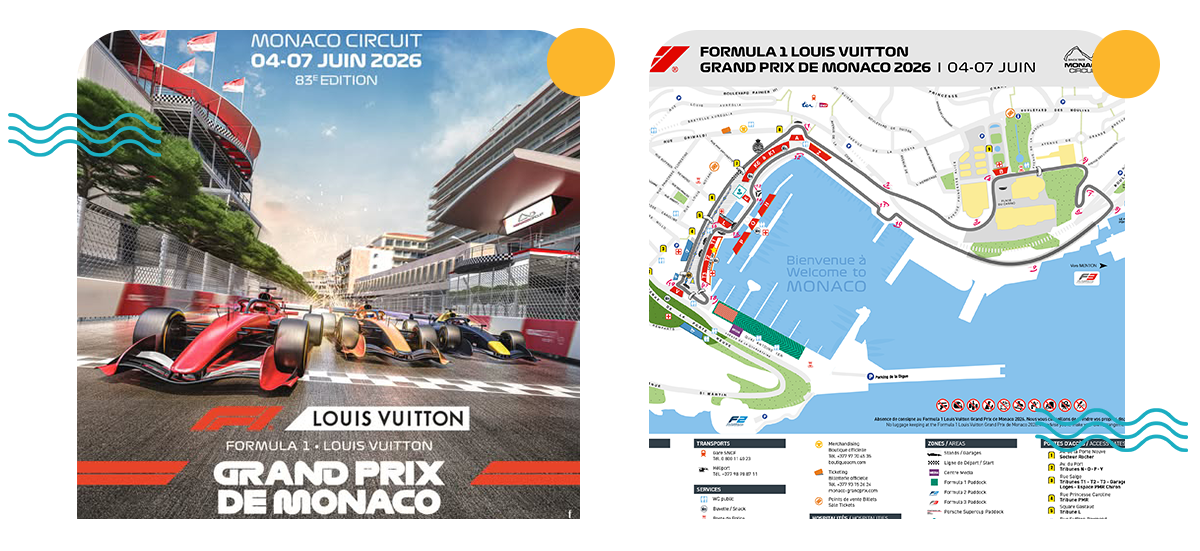
Meanwhile, Port Hercules also changes appearance. Yachts begin arriving gradually, sometimes weeks before the race. Berths are reserved long in advance, and their arrival is part of the spectacle of the “days before.”
👉 The Monaco Grand Prix will take place from June 4 to June 7
Before the glamour: an immense invisible logistical effort
What is often overlooked is the scale of the teams involved. For both the Festival and the Grand Prix, hundreds of technicians work behind the scenes: structural engineers, lighting specialists, security experts, maritime coordinators for yachts, media teams. Some temporary installations are even assembled overnight to avoid disrupting traffic and daily life.
The Riviera then operates like a stage in preparation, with its technicians behind the scenes before the main actors step in.
Did you know?
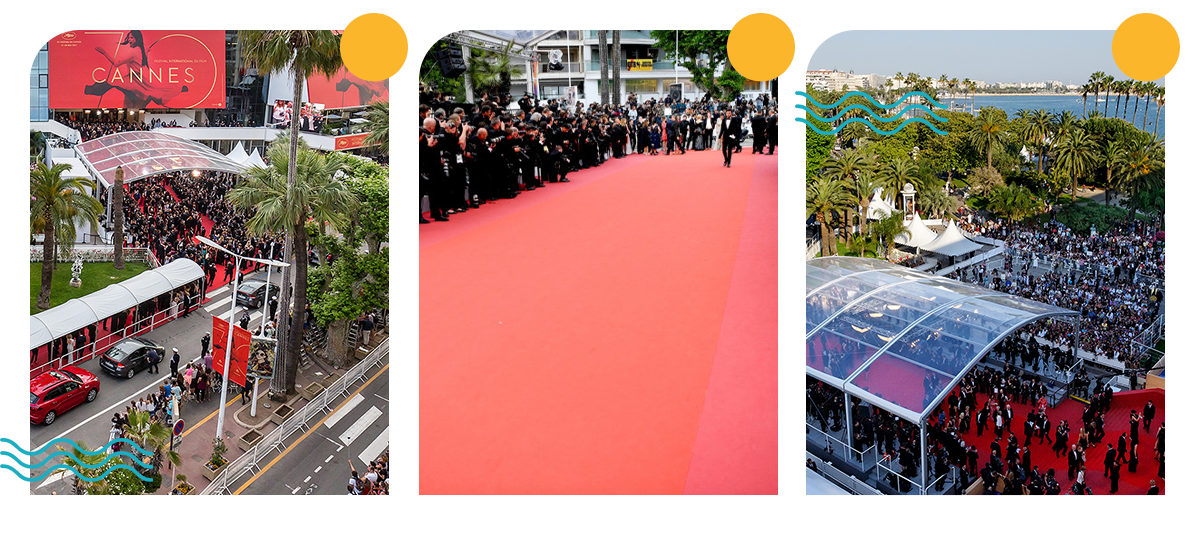
In Cannes, the famous carpet wasn’t always its iconic color. During the first editions of the Festival, between 1946 and the late 1940s, the steps were covered with a blue carpet. It wasn’t until 1984 that red became permanent.
The initiative came from journalist Yves Mourousi, who was involved in organizing guest arrivals at the Palais des Festivals. His goal was clear: structure the ascent of the steps and visually distinguish invited personalities from the public and photographers. The 24 steps thus became the stage for a true performance, dressed in a 60-meter red carpet inspired by Hollywood tradition and the symbolism of prestige.
This shade of red is not random. The central section uses a specific shade identified by code 0144, while the borders feature a tone called “Teatro.” This chromatic precision contributes to the Festival’s visual identity.
The ascent of the steps also follows a strict protocol: evening wear is required, even for the press, along with rules governing phone usage. A codified ritual that reinforces the almost ceremonial dimension of the event.
Choosing to stay on the French Riviera during this period means discovering a different side of the region. The energy of major events is already in the air, cities begin to transform, teams are mobilizing, yet the atmosphere still feels fluid and unhurried.
It is a privileged moment to observe behind the scenes, to feel the build-up in intensity, and to enjoy a region buzzing with creative energy—without yet being in the heart of the crowds.
Between elegance, anticipation, and transformation, these days before offer a unique experience: that of a French Riviera just about to take the stage.