
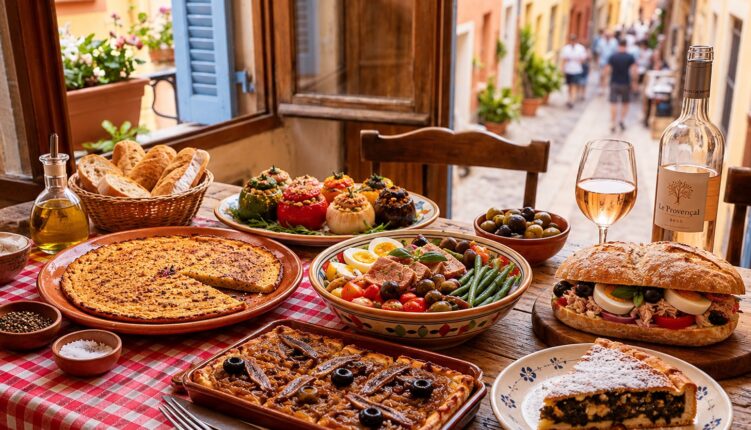
The French Riviera is famous for its Mediterranean landscapes, sun-drenched beaches, and picturesque villages. Yet beyond its beautiful scenery, the region also boasts a rich and authentic culinary heritage that is well worth exploring.
Local cuisine perfectly reflects the Mediterranean way of life. Here, ingredients are simple, flavours are generous, and every specialty tells a little of the region’s history.
Discovering the culinary specialties of the French Riviera is also an opportunity to meet local people, producers, and learn about their traditions. Whether you’re a food enthusiast or simply curious to try something new, here are the must-try dishes to enjoy during your next stay.
Table of contents
- Must-try culinary specialties of the French Riviera
- Local markets: at the heart of Mediterranean gastronomy
- Local products and regional delicacies to discover
- Conclusion: the French Riviera, a destination to savour all year round
1. Must-try culinary specialties of the French riviera
Niçoise cuisine plays an important role in the region’s culinary heritage. Influenced by the Mediterranean and the traditions of the surrounding countryside, it relies on seasonal vegetables, olive oil, and aromatic herbs.
Among the many culinary specialties of the French Riviera, some have become true symbols of local cuisine.
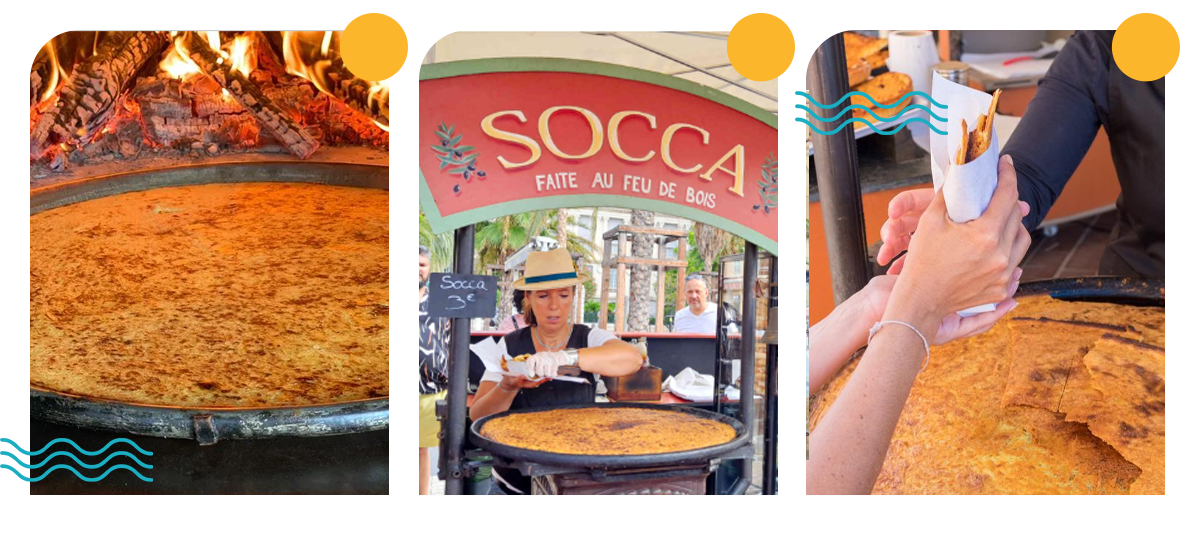
Socca : Nice’s must-try specialty
You simply can’t visit Nice without trying socca! This thin pancake, made from chickpea flour, water, and olive oil, is traditionally baked in an oven.
Crispy around the edges and soft in the middle, socca is best enjoyed hot, usually with a little black pepper. Simple yet delicious, it’s one of those local specialties that’s perfect for sharing as an aperitif or enjoying while wandering through the narrow streets of Old Nice.
Where to try it? At Chez Pipo, a well-known spot for traditional socca, or Chez Thérésa, in Old Nice, which you can also find at the Cours Saleya market.
Pissaladière : a delicious local specialty
Another great classic of Niçois cuisine is pissaladière, a savoury tart topped with slowly caramelised onions, anchovies, and black olives.
Its combination of sweet and savoury flavours makes it especially popular for lunch or as an aperitif. It can be enjoyed warm or at room temperature, making it a convenient choice for a picnic by the sea.
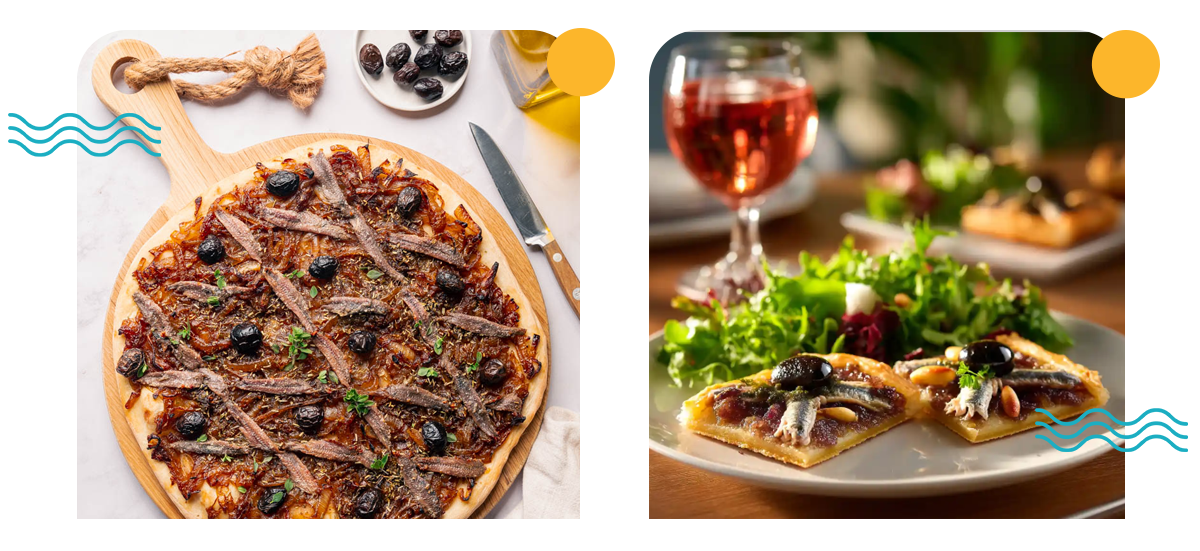
Where to find it? In traditional bakeries throughout Old Nice or in shops selling regional specialties around Cours Saleya.
Pan bagnat: a Niçoise salad in a sandwich
A true symbol of local cuisine, pan bagnat is a round sandwich generously filled with the traditional ingredients of a Niçoise salad.
It typically contains tomatoes, eggs, tuna, anchovies, olives, and olive oil. Its name refers to the bread being “bathed” in olive oil, which gives the sandwich its distinctive flavour.
Easy to take away, it’s an ideal lunch before a day of sightseeing or a relaxing break on the beach.
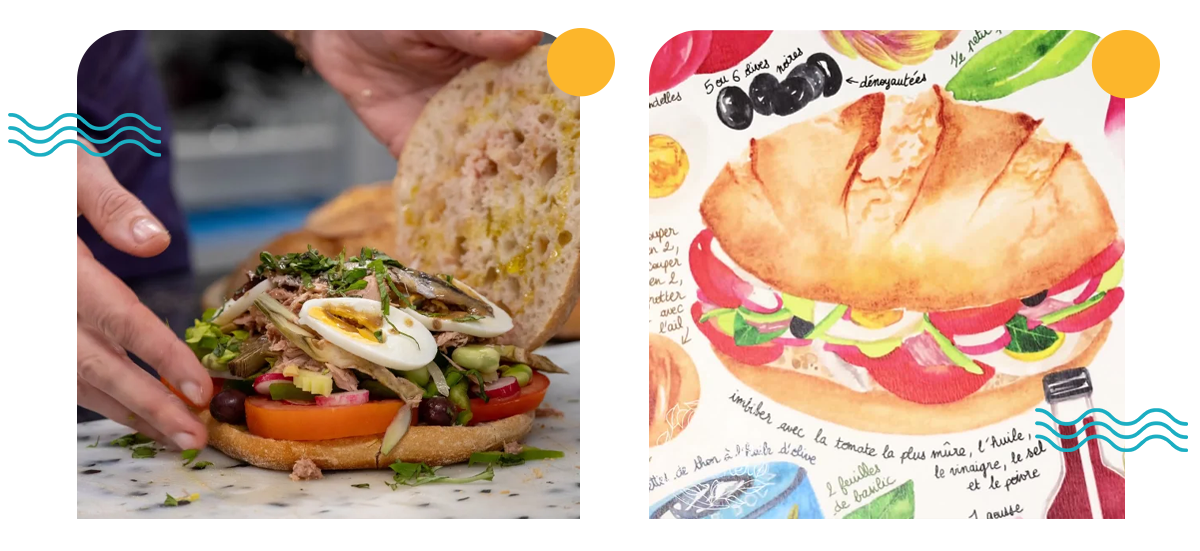
Our tip: Pick up your pan bagnat at Kiosque Tintin in the Libération neighbourhood, Boulangerie La Niçoise, or Lou Balico.
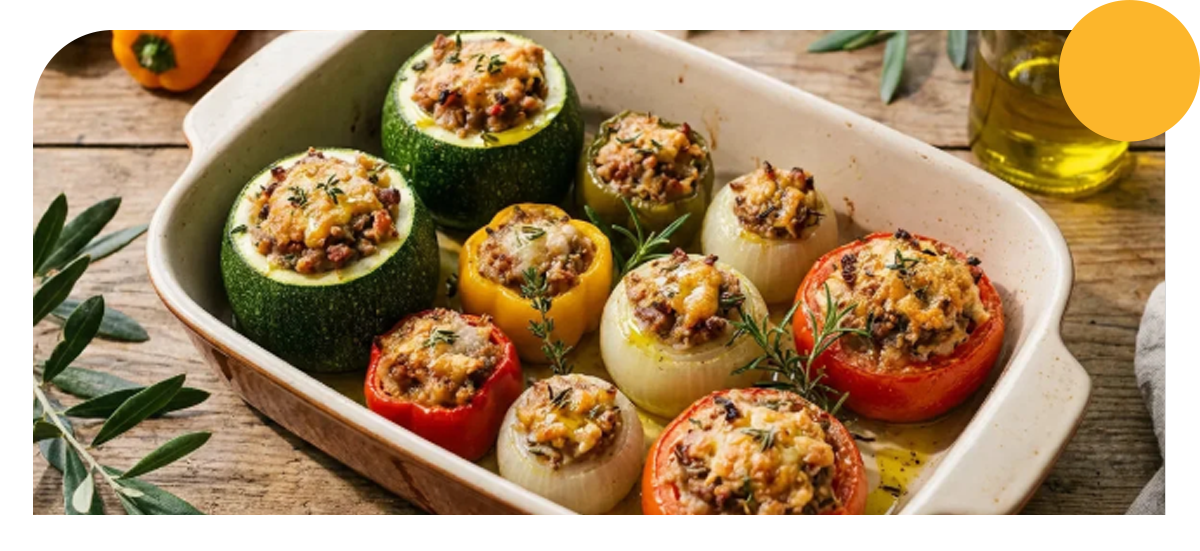
Petits farcis Niçois: a traditional family recipe
Petits farcis hold a special place in Niçois gastronomy. This traditional dish consists of small vegetables, such as courgettes, tomatoes, or onions, filled with a savoury stuffing and baked in the oven.
Every family has its own recipe and variations, which is part of what makes this specialty so charming. Petits farcis reflect a generous style of cooking, deeply connected to seasonal ingredients and local culinary traditions.
To discover them, look for restaurants serving traditional Niçois cuisine, particularly those awarded the Cuisine Nissarde label.
Tourte de blettes: a surprisingly delicious sweet treat
To finish on a sweet note, discover tourte de blettes, a traditional Niçois dessert that’s as unusual as it is delicious.
Despite its name, this sweet pastry combines Swiss chard leaves with ingredients such as raisins, pine nuts, and sugar, all wrapped in a thin pastry crust.
This unexpected combination creates a delicately flavoured dessert that perfectly reflects the originality of local cuisine.
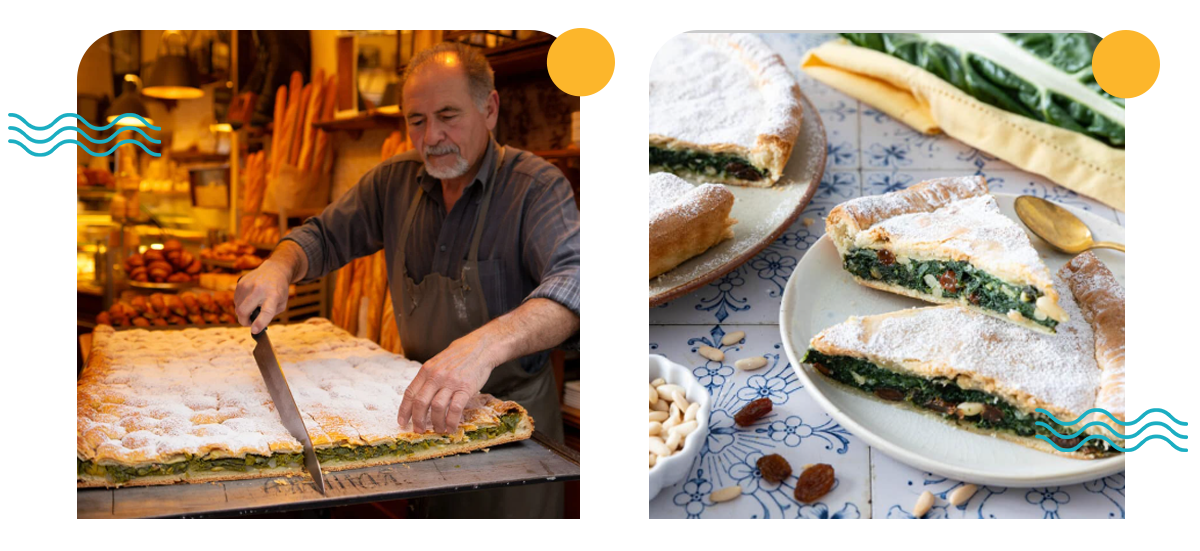
Where to try it? In selected traditional bakeries and pastry shops around Nice. Don’t hesitate to ask whether it’s made on the premises.
2. Local markets : at the heart of Mediterranean gastronomy
Beyond traditional recipes, local markets are an essential part of discovering the culinary specialties of the French Riviera.
They offer the opportunity to meet producers, explore seasonal ingredients, and experience everyday local life. With colourful stalls filled with fruit, vegetables, olives, cheeses, and flowers, every market offers an experience of its own.
Cours Saleya market in Nice
Located in the heart of Old Nice, Cours Saleya is undoubtedly one of the city’s most iconic markets.
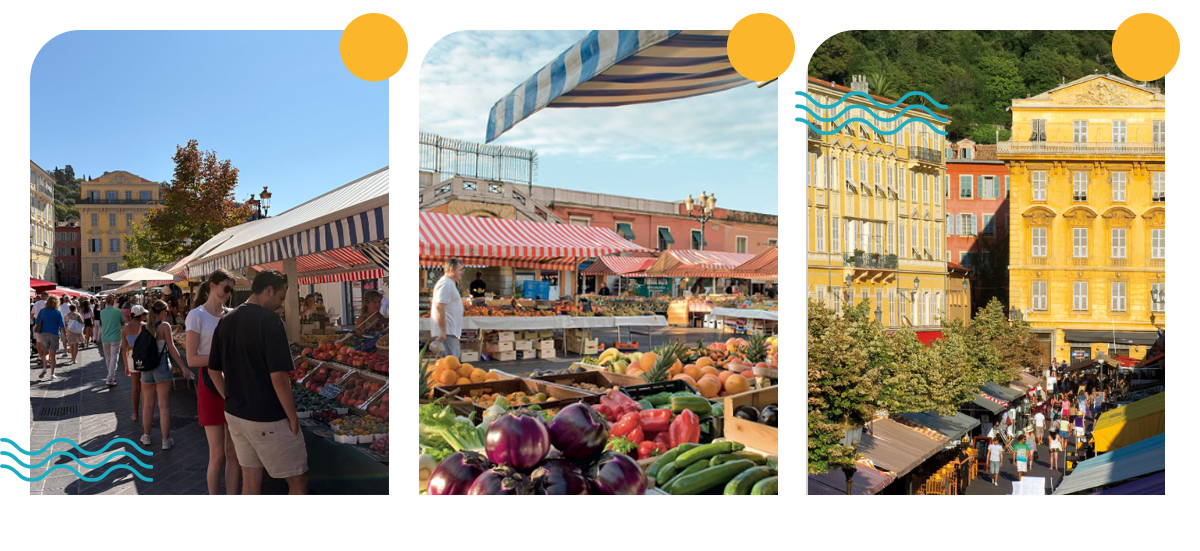
Famous for its flower market, it is also home to stalls selling fresh fruit, vegetables, regional products, and local specialties. It’s a particularly lovely place to start your day.
You can pick up a few ingredients to prepare lunch or simply enjoy the lively atmosphere of the surrounding café terraces.
Practical tip: Visit in the morning, from Tuesday to Sunday. On Mondays, the market gives way to antique and second-hand dealers.
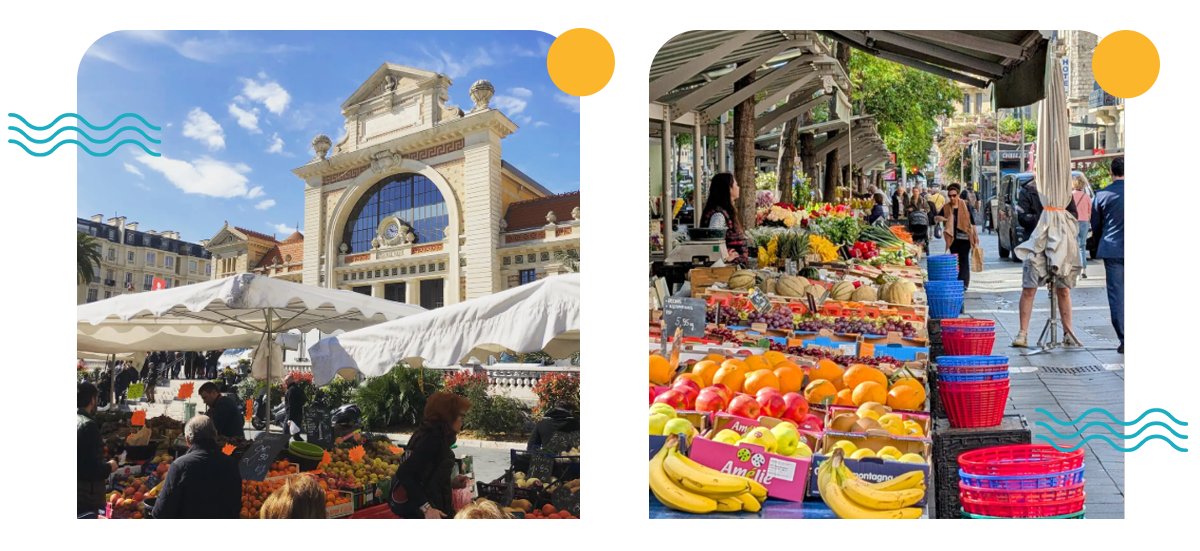
Libération Market: a more local experience
To discover another side of Nice, head to the Libération neighbourhood and its popular market.
Much loved by locals, it offers a wide selection of seasonal fruit and vegetables, fresh fish, cheeses, flowers, and other regional products. Its friendly atmosphere provides a glimpse into everyday life in Nice, away from the main tourist areas.
After exploring the stalls, take some time to enjoy a coffee in the neighbourhood. You can also settle down at one of the terraces around Gare du Sud.
The market takes place from Tuesday to Sunday in the morning, according to the published opening schedule for 2026.
3. Local products and regional delicacies to discover
The French Riviera’s rich gastronomic heritage also comes from its local products, which play an essential role in Mediterranean cuisine.
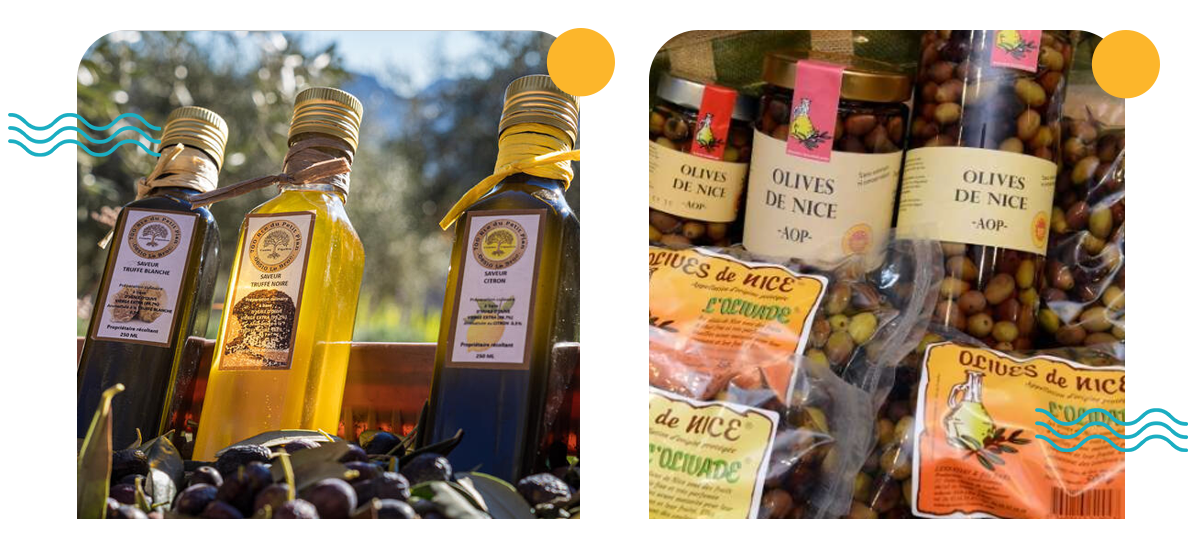
Olive oil and olives from Nice
Olive oil is one of the fundamental ingredients of Niçois cuisine. It accompanies salads, enhances vegetable dishes, and is used in many traditional recipes.
Olive oil from Nice benefits from Protected Designation of Origin (PDO) status. Produced from the Cailletier olive variety, it is particularly appreciated for its mild taste and delicate aromas.
Olives from Nice also have PDO status, reflecting the region’s long-standing olive-growing traditions and expertise.
To discover these products, visit local markets or specialty food shops. They also make wonderful edible souvenirs to bring home from your stay.
Menton lemons: an iconic fruit of the Riviera
No exploration of the French Riviera’s culinary treasures would be complete without mentioning the famous Menton lemon. Grown on the hills surrounding this town near the Italian border, this citrus fruit benefits from Protected Geographical Indication (PGI) status, recognising its origin and distinctive characteristics.
Appreciated for its intense fragrance, rich aromas, and balance between acidity and sweetness, the Menton lemon holds a special place in local gastronomy. Chefs and artisans use it in both sweet and savoury creations, including lemon tarts, jams, confectionery, sauces, and fish dishes.
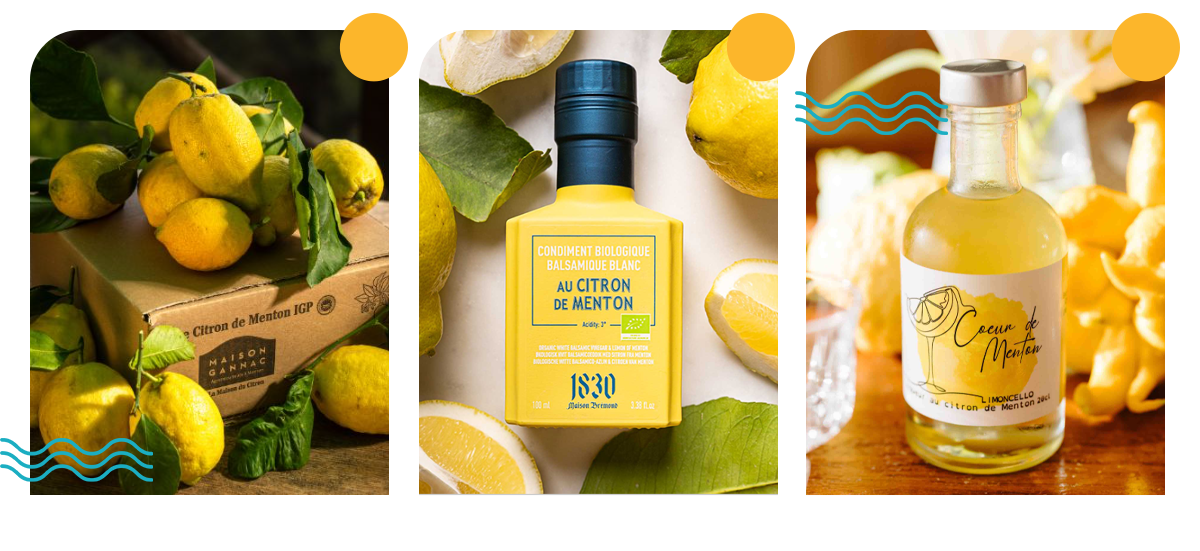
Where to discover it? During a visit to Menton, take time to explore the Les Halles market and local artisan shops, where you’ll find a variety of products made from this distinctive citrus fruit.
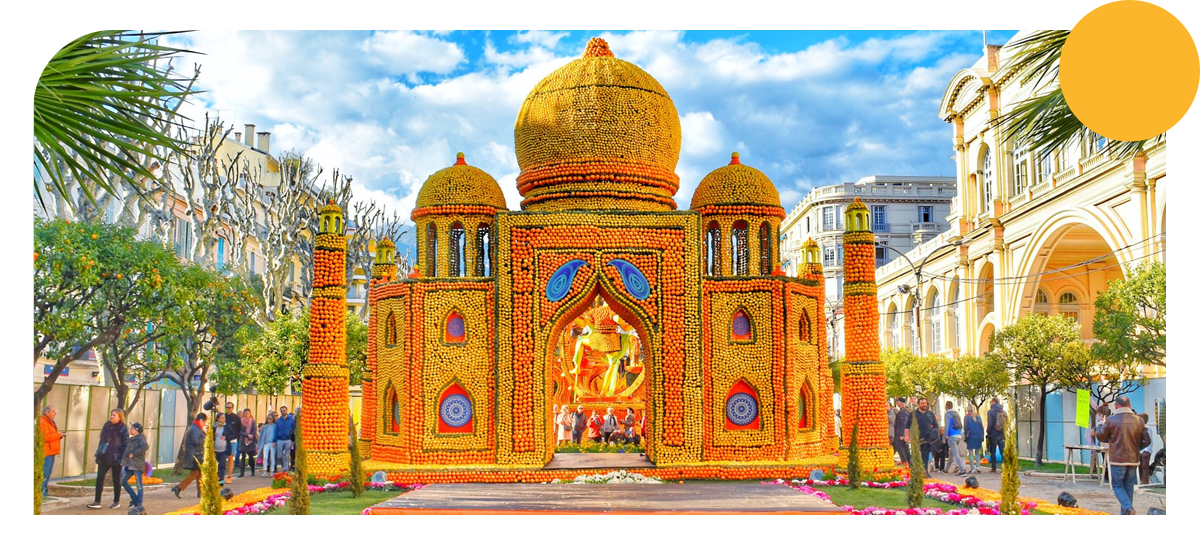
But in Menton, the lemon is much more than just an ingredient. It’s part of the town’s identity, celebrated every year during the famous Fête du Citron (Lemon Festival), one of the highlights of the local events calendar.
4. Conclusion : the French Riviera, a destination to savour all year round
Discovering the French Riviera also means taking the time to explore its culinary traditions, wander through local markets, and taste the recipes that make its gastronomic heritage so special.
From enjoying freshly made socca in the narrow streets of Old Nice to discovering fresh produce at the Provençal market in Antibes, every food experience offers a different perspective on the region.
What’s more, local cuisine changes with the seasons, bringing new flavours and discoveries throughout the year.
Whether you’re visiting for a weekend or a longer holiday, don’t miss the opportunity to discover the culinary specialties of the French Riviera. Beyond its landscapes and climate, the region is also best experienced through its flavours, traditions, and the simple pleasure of sharing a good meal.
Explore our selection of holiday homes and apartments, ideally located for discovering local markets, tasting regional specialties, and making the most of the Mediterranean way of life.